
Knee pain is usually caused by osteoarthritis, a meniscus tear, patellofemoral pain or a ligament injury. Most cases improve without surgery, with the right diagnosis and targeted strengthening of the muscles around the knee and hip. Seek urgent care if you can’t bear weight, the knee locks, or it swells rapidly after an injury.
Knee pain is one of the most common musculoskeletal complaints among adults. As a major weight-bearing joint, the knee absorbs forces up to four times body weight during daily activities like walking down stairs or squatting. It often comes from repetitive bending, squatting or lifting, from sport, or simply from everyday activities like climbing stairs, gardening or manual work. Pain can appear suddenly after a twist, or build gradually over years of wear.
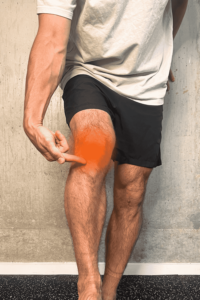
What Are the Primary Causes of Knee Pain?
The knee relies on ligaments and muscles for stability and cartilage for shock absorption. Damage to any of these structures produces a distinct pattern of pain and instability.
- Osteoarthritis: The gradual breakdown of articular cartilage causes stiffness, swelling and a deep ache, especially with morning movement.
- Meniscus tears: The meniscus is a rubbery shock absorber between the thigh and shin bones. Twisting forcefully while bearing weight can tear it and lock the joint.
- Patellofemoral pain syndrome: Pain around or behind the kneecap, often triggered by prolonged sitting, running or climbing stairs.
- Ligament injuries: Strains or tears to the ACL or MCL usually occur during sudden directional changes or a direct impact.
What Are the Warning Signs of Serious Knee Damage?
- Joint instability: A sensation that the knee is giving out or buckling under normal body weight.
- Mechanical locking: Inability to fully straighten or bend the leg because torn tissue is catching inside the joint.
- Rapid swelling: Fluid building up inside the joint within hours of an injury.
- Inability to bear weight: Pain that stops you taking more than a couple of steps.
If you have any of these, see a physiotherapist or doctor promptly.
How Do You Treat Persistent Knee Pain?
Managing knee pain means balancing joint protection with muscle strengthening. Low-impact exercise like stationary cycling keeps the joint mobile without adding compressive force. Strengthening the quadriceps, hamstrings, calves and hip muscles is crucial, but it must be done in a way that doesn’t aggravate the knee. The correct diagnosis and exercise prescription is vital — which is exactly what our physiotherapists in Neutral Bay assess before building your plan.
Exercises for Knee Pain You Can Try at Home
Start gently and stay within a comfortable range. As a rule, don’t let pain go above 3 out of 10.
1. Isometric Extension
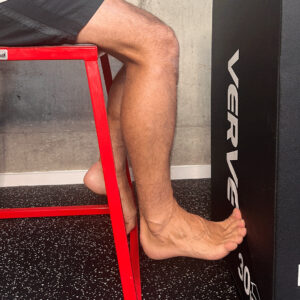
Sit with your knee bent to 90 degrees and your foot off the floor. Push your foot into an immovable object, like a wall or door frame, as hard as you can without pain going above 3/10. Hold that pressure for 45–60 seconds, then rest for 1 minute. Repeat 3 times. If comfortable, do this set up to 3 times a day.
2. Wall Squat with Roller
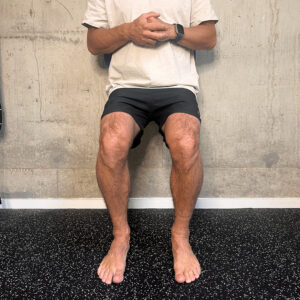
Place a foam roller against your lower back and lean into a wall. On a non-slip surface, walk your feet about half a metre forward. Keeping your torso upright, slowly squat toward 90 degrees at the hips and knees. If pain goes above 3–4/10, hold at that point for 5 seconds, then return to the start. Do 3 sets of 12–15. Once you can do it pain-free, add a dumbbell or kettlebell.
3. Heel-Elevated Mini Squat
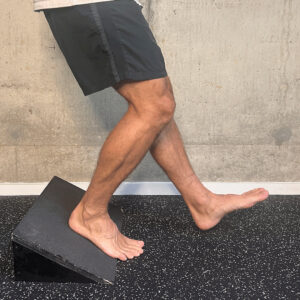
Stand with your heels raised on a block, a thick book or a decline board. Squat slowly, bending mainly at the knees, keeping your hips and torso tall without leaning forward. If you feel more than 3–4/10 pain, reduce how deep you go. Do 3 sets of 12–15.
If pain is severe or worsening, check with an mrp physiotherapist before starting these.
When Should You See a Physio for Knee Pain?
See a physiotherapist if your knee pain lasts more than two weeks, keeps returning, or limits walking, stairs or sport. Book urgent care if you can’t put weight on the leg, the knee locks or gives way, or it swells rapidly after an impact. Most knee pain improves with the right assessment and a targeted strengthening program — and no referral is needed to see us.
Frequently Asked Questions
What helps knee pain clear up fast?
Immediate relief involves relative rest, ice for 20 minutes at a time for pain relief, elevating the leg, and temporary use of a compression sleeve to manage localised swelling.
How can you tell if knee pain is serious?
Knee pain is serious if you cannot put weight on the leg, there is giving way or the joint locks, you notice visible deformity, or significant swelling appears immediately after an impact.
Is walking good for knee pain?
Walking can help with mild to moderate knee arthritis or general stiffness because it lubricates the cartilage and strengthens the supporting leg muscles. If walking makes your symptoms worse, check in with your physio.
What is the fastest way to relieve knee pain?
For sudden knee pain, rest, ice, compression and elevation ease symptoms in the first 48 hours. For lasting relief, a physio-guided strengthening program for the quads, hamstrings and hips is the most effective approach.